Build Your Backrooms How to Build a Maze
Hallway flow, room choice, and layout patterns that keep visitors inside longer.
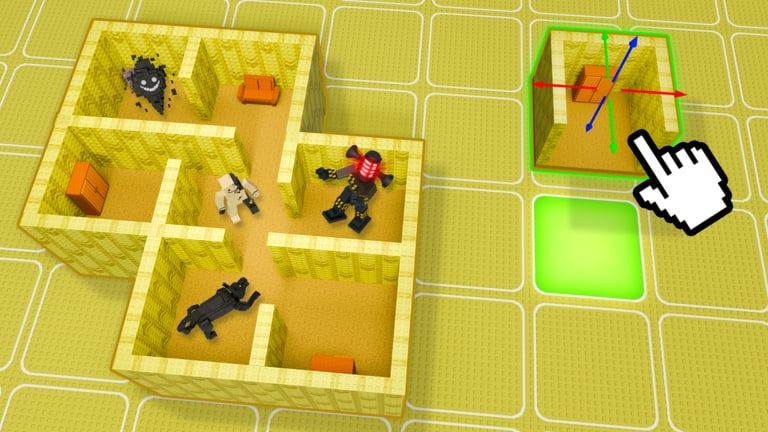
A profitable Build Your Backrooms maze is not random yellow tiles — it is a route you design so visitors stay inside long enough for monsters to pay out. Wind Sun Moon [WSM] gives you modular hallways, themed rooms, and building pieces that modify traffic once you unlock them. This guide explains layout thinking, piece priority, and rebuild habits that pair with How to Catch Players and How to Earn Cash.
The game is live on Roblox with explore visits enabled: strangers and friends can walk your creation in six-player servers. Every second they spend lost is a chance for your catchers to work.
Core design goals
Before placing tiles, decide what the maze should do:
- Increase time-on-map — More steps between entrance and exit means more monster contacts.
- Create decision points — Forks and fake paths punish straight-line speed runners.
- Scale with budget — Start small, expand outward without breaking the path visitors already learned.
- Stay readable for you — You need to edit later; label areas mentally (north loop, pit room, etc.).
If visitors leave in under twenty seconds, fix layout before buying expensive monsters.
Building tools overview
Open build mode from the plot UI — exact button names live on Controls. You typically interact with:
- Hallway segments — Straight, corner, T, and cross pieces that snap to a grid.
- Room kits — Larger prefabs (office pools, carpet rooms, utility closets) that break visual repetition and hide exits.
- Doors and transitions — Connectors that can mislead if paired with dead ends.
- Decor and lighting — Mostly cosmetic early; use sparingly until income stabilizes.
Rotate pieces before confirming placement. A reversed corner looks fine in build view but opens a shortcut visitors exploit.
Layout patterns that work
The broken grid
Instead of a perfect rectangle, offset every third segment one tile. Visitors lose sense of direction while the map stays compact for your build limit.
Loop and bait
Build a visible loop near the entrance with a tempting side door. The side door leads to a short dead end; the true progress path sits behind a similar-looking corner farther in. Players who rush the bait turn back into monster range.
Hub and spoke
Place a central room with four exits, only one real. Rotate which exit is “true” after upgrades so repeat explorers cannot memorize one route. Update hub shape when Updates Hub adds new room types.
Layered depth
Push the real exit to the far corner of your plot. Early corridors can be wide and bright; inner sections narrow and duplicate visuals — classic backrooms disorientation without unfair invisible walls.
Test each pattern by walking it yourself with Controls movement — if you sprint through, so will visitors.
Room and building priority
When the shop offers both hallway packs and buildings:
| Priority | Why |
|---|---|
| Connectors that close gaps | Open edges let visitors leave the maze volume |
| Rooms that add forks | Cheap complexity beats one expensive statue |
| Buildings with income perks | Read stat text; some boost offline or catch bonus |
| Pure decor | After cash flow is stable |
Cross-check value on Tier List when choosing between two building unlocks at similar prices.
Entrance and exit etiquette
Your entrance is marketing. A narrow choke with flicker lights sets expectation; an oversized lobby without monsters wastes first impressions.
Exits must exist — explore mode players tolerate difficulty, not softlocks. Hide exits, do not delete them. A hidden maintenance door beats an invisible teleport that triggers bad reviews and fewer revisits.
Expanding without breaking the maze
Add wings off low-traffic dead ends first. Extending the main spine mid-week strands returning visitors who memorized the old route — good for challenge, bad if they quit before a catch.
When plot size upgrades arrive, extend depth before width. Longer mazes increase average path length more than shallow sprawl.
Multiplayer testing
Invite friends into your server (max six players). Have one person speed-run while others watch monster triggers. Note every spot they double back — those are premium How to Catch Players coordinates.
Also visit top mazes in explore queue. Screenshot clever door tricks and rebuild them legally on your plot; do not copy entire layouts tile-for-tile if it kills your creativity, but do steal ideas.
Common build mistakes
- Straight shot entrance-to-exit — Fix with one mandatory loop before any exit segment.
- Monsters only at spawn — Visitors outrun low-tier catchers; place downstream after turns.
- Too many dead ends early — More than three empty branches feels unfair; populate with at least decoy loot or lights.
- Ignoring build grid — Misaligned snaps create accidental gaps players clip through.
- Cosmetic overspend — Pretty halls with no forks earn less than ugly mazes with logic.
Maintenance rhythm
Rebuild one segment per session instead of wiping the plot. Wipes reset visitor familiarity and idle earnings momentum discussed in Offline Earnings.
After each Wind Sun Moon [WSM] patch, walk your maze once and read Updates Hub for new pieces that obsolete old choke points.
Tie-in to earnings
Layout is the multiplier on every other system. Strong monsters on a straight line still earn less than mid-tier monsters on a fork-heavy path. Once structure feels solid, shift focus to How to Earn Cash upgrades and optional Codes Hub boosts when verified codes exist.
If you are brand new, finish Getting Started before major construction — it unlocks the tools this guide assumes you already have. When the maze structure is solid but foot traffic is low, switch to Attract Visitors to open the plot, fix the entrance funnel, and convert explore-queue players into catches.
Frequently Asked Questions
Quick answers for maze builders and explorers.
How big should my first maze be?
Start with at least eight to twelve connected pieces including two forks and one loop. Expand when catches pay for new segments without draining your cash reserve.
Can visitors leave if my maze has no exit?
Avoid hard traps that strand players unfairly. Hidden exits are fine; removing all exits can hurt explore ratings and repeat visits.
Do room types affect catch rate?
Rooms mainly change path length and visibility. Some buildings add stat bonuses — read each item's description before buying.
Should I rebuild my whole maze often?
Incremental edits are safer. Full wipes reset visitor learning and can pause income while you re-place monsters.
Where do monsters fit into layout planning?
Design forks first, then place monsters on corners and post-bait turn-backs. See How to Catch Players for placement detail.